 Passcard in the United Arab Emirates
Loyalty cards in your customers’ phones, in the United Arab Emirates
Your customers scan a QR code at your counter and your card sits in Apple Wallet or Google Wallet, next to their boarding passes and payment cards. No app to download, in whatever language they speak.

Works with iPhone & Android
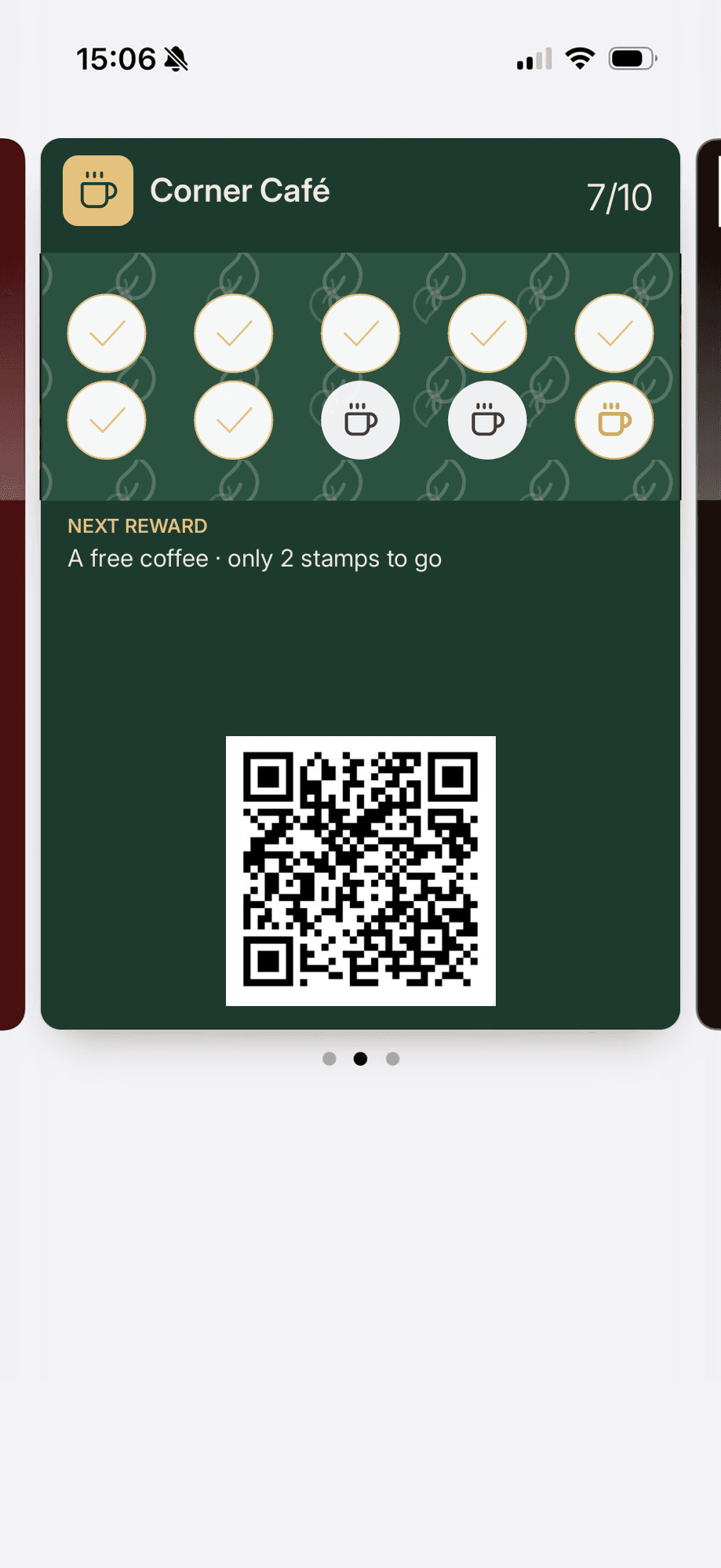
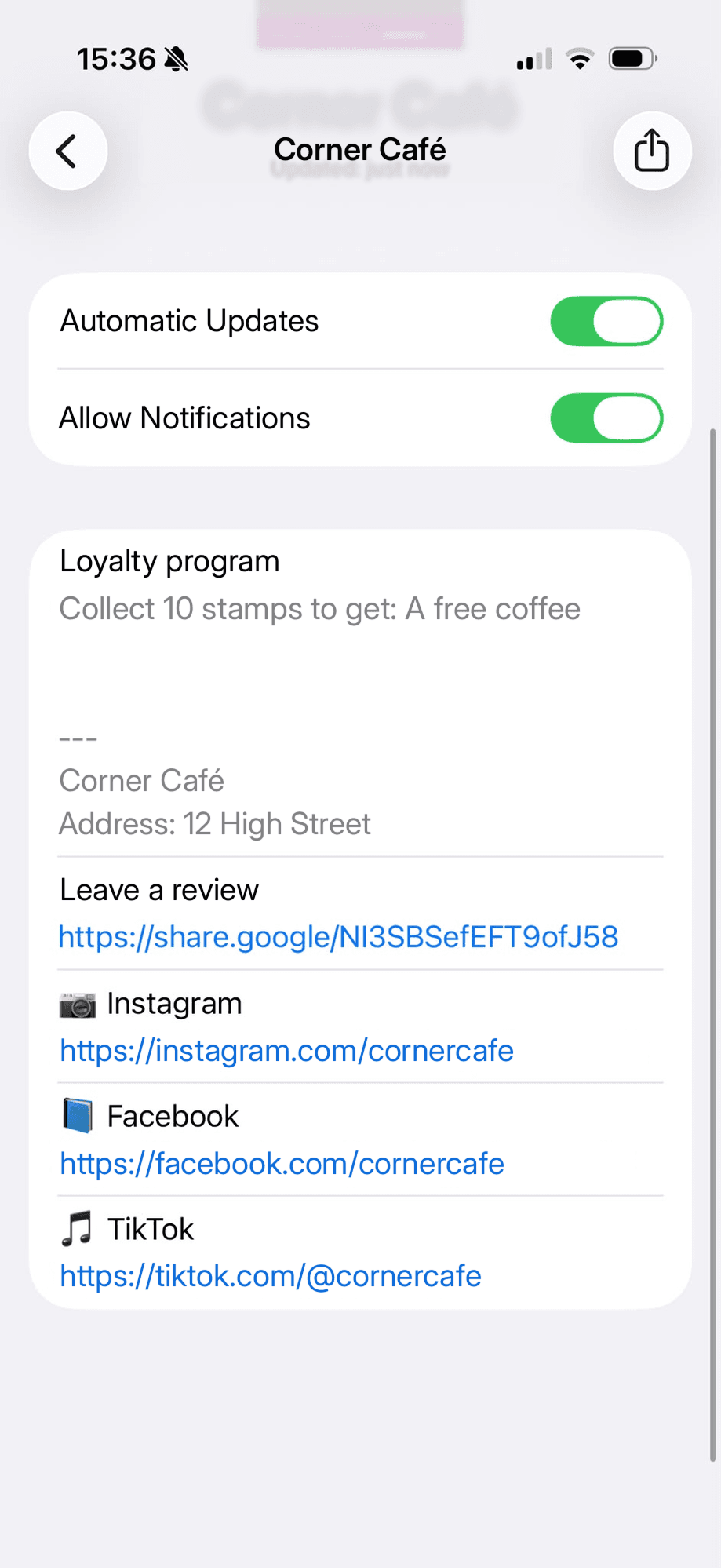
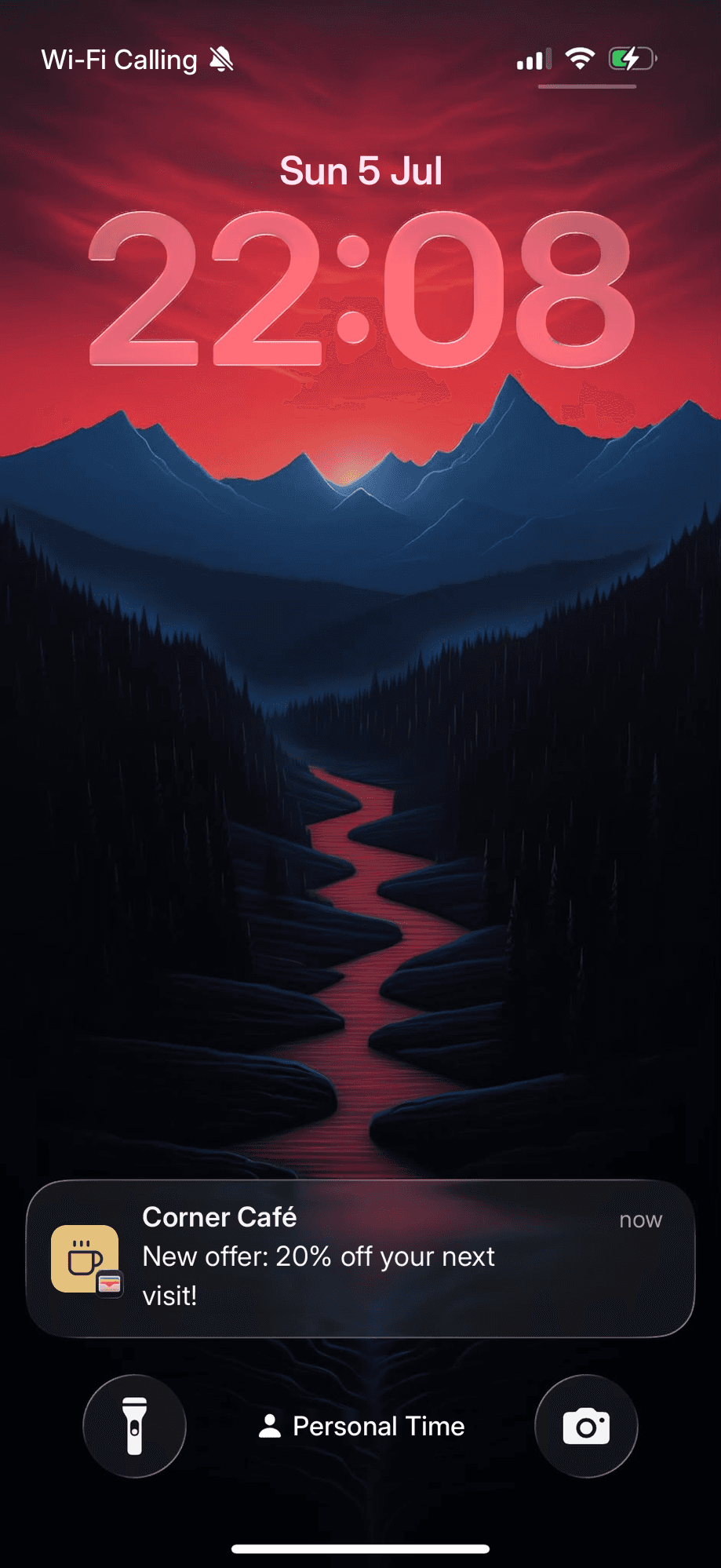
Short answer: In the United Arab Emirates, Passcard gives your shop, café or salon a loyalty card in Apple Wallet and Google Wallet: customers scan a QR code at the counter and keep the card on their phone, without downloading an app. It comes as a single all-inclusive plan at $29 a month, before VAT, with unlimited customers, unlimited cards and automatic messages, plus a free plan for your first 30 customers.
Loyalty cards by business type
Pick your kind of business to see how a Passcard loyalty card works for it.
- Data in Europe
- Secure connection
- No commitment
 Data in Europe
Made for shops in the United Arab Emirates
- Your customers' phone numbers
- Dialing code +971 by default
- Billing
- With your trade licence number
- Automatic messages
- Sent at Gulf Standard Time time
- Price
- In USD, no conversion
What Passcard does for you
Fewer lost customers. More regulars.
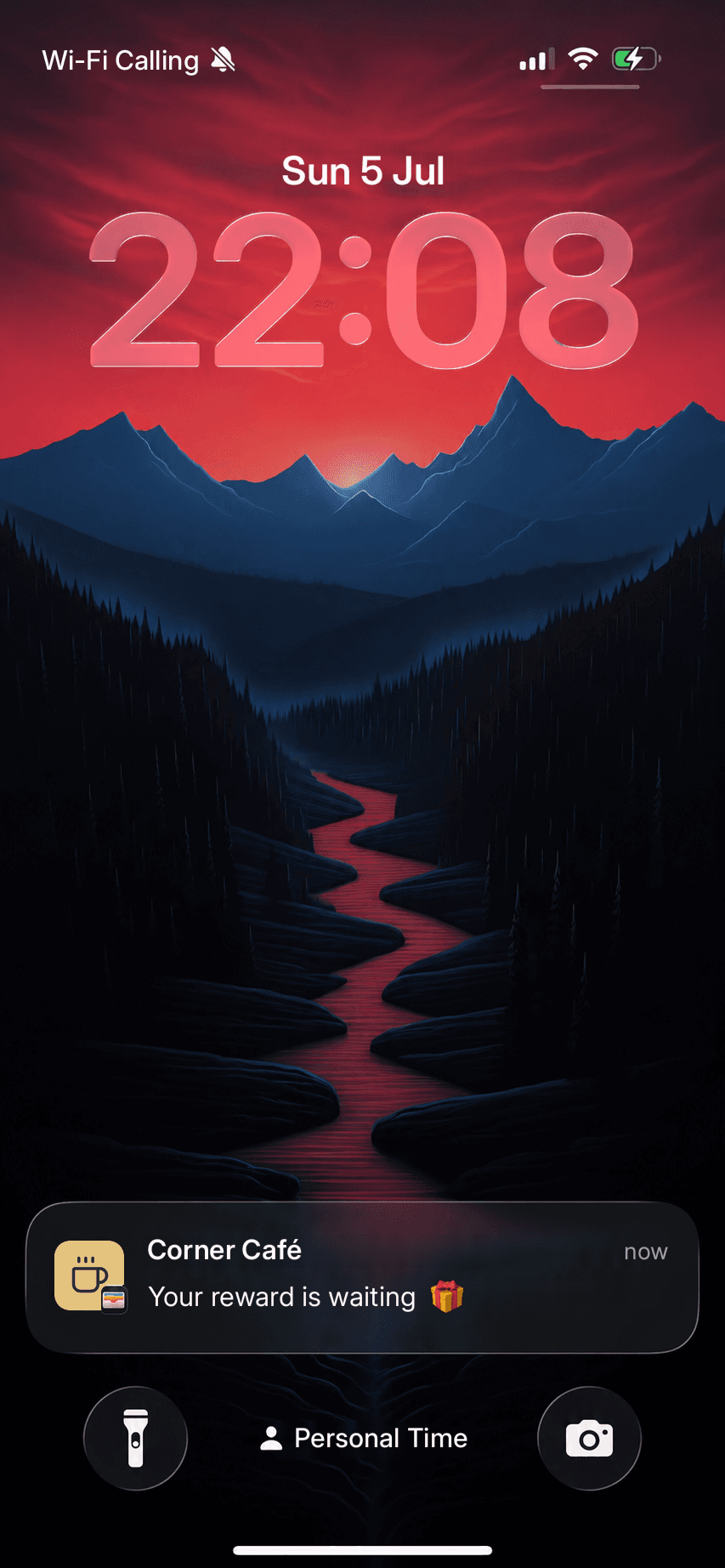
Bring your customers back
The message lands on the lock screen, from the card in the Wallet.
Know who really comes back
The dashboard tells you in numbers and plain sentences.
Active customers
212
Stamps today
19
Rewards / month
14
Returning customers
143
Stop letting your customers forget you
You write the message once, and it goes out on its own.
What your customer receives
Corner Café
We miss you! Come and see us again soon.
- Inactive customer
- Visit milestone reached
- Reward about to expire
A loyalty programme for the way people shop in the United Arab Emirates
From a karak counter in a Sharjah side street to a fashion unit on the second floor of a Dubai mall, the businesses that keep customers coming back are the ones people remember. Passcard puts your loyalty card in Apple Wallet and Google Wallet, so it travels with the customer instead of staying in a drawer behind your till.
Your customers join by scanning the QR code on your counter, typing a few details and tapping to add the card. They install nothing. From then on, each visit you stamp (or each purchase you turn into points) updates the card on their phone within moments, and the reward appears when they reach it.
- Stamps per visit for cafés, barbershops and salons, or points for shops where baskets vary.
- Your logo, your colours and your own reward wording on the card.
- A scanner that runs on your phone or on a device you pair at the counter, with separate access for each member of staff.
- A dashboard showing who returns, who has slowed down and which rewards are waiting to be claimed.
Malls, souks and neighbourhood streets: one card for all of them
Business in the United Arab Emirates happens in very different settings. In Dubai and Abu Dhabi, many shoppers spend their evenings in air-conditioned malls, where your unit sits beside dozens of others competing for the same footfall. In the older quarters of Deira, Bur Dubai or Sharjah, the souks still run on personal relationships and repeat visits. In Ajman, Ras Al Khaimah, Fujairah and Umm Al Quwain, the neighbourhood barbershop or bakery often knows its regulars by name.
A Wallet card works the same way in each of these places. A mall kiosk has no room for a stack of cardboard cards and a stamp pad; a souk stall needs something quicker than writing a name in a notebook; a café on a residential street wants its regulars to feel recognised. The card does that job without asking you to change how you serve.
Residents return, tourists pass through: who the card is really for
Visitors are a large part of life in the Emirates, and a tourist who buys one coffee on the way to the airport will probably not fill a card. That is fine. The people a loyalty programme rewards are the ones who live and work around you: the office team that orders karak every afternoon, the families who use the same salon every month, the residents of the towers above your mall unit, the drivers who stop at your shawarma counter on the way home.
Those customers are the ones worth keeping, and they are the ones most likely to have their phone in hand at your counter. If a visitor joins anyway, the card costs you nothing extra on the paid plan, and some come back on their next trip or recommend you to a friend who lives nearby.
Many languages at one counter
On a single afternoon, a café in the United Arab Emirates might serve customers who speak Arabic, English, Hindi, Urdu, Malayalam, Tagalog, Russian or French. A paper card in one language leaves some of them guessing. With Passcard, the words on the card are the ones you type: the name of the reward, the short description and the message on the back, so you choose the language, or the mix of languages, that suits your customers.
The system labels that Apple Wallet and Google Wallet display around your card follow the language set on each customer’s phone. The person whose phone is in Arabic and the person whose phone is in English both see the familiar Wallet screens, while your own text stays exactly as you wrote it.
Paper punch card or Wallet card in a mall unit
A paper card has real charm and some of your customers will want to keep theirs. The question is what each option asks of you and of them on a busy evening. Here is how the two compare for a typical shop in a mall:
| Situation | Paper punch card | Passcard in Apple Wallet or Google Wallet |
|---|---|---|
| Customer forgets the card | No stamp that day, or a new card started | The card is on the phone they are already holding |
| Counter space | Cards, a stamp and a box to store them | A printed QR code poster, nothing else |
| Staff turnover | Any stamp works, so stamps are easy to copy | Each staff member has their own scanner access, which you can remove |
| Telling regulars about new hours | A sign on the shutter they may not see | A notification on the card, plan permitting |
| Knowing who comes back | Guesswork | A dashboard listing returning and lapsed customers |
| Language | Printed once, in one language | Text you can rewrite at any time |
Rewards that suit a karak counter, a salon or a restaurant
The right card depends on how often people come. A karak or coffee counter sees some regulars every day, so a longer card with a free drink at the end keeps them coming without giving too much away. A barbershop sees the same faces every few weeks, so fewer boxes and a free beard trim or hot towel finish make the reward feel close. A beauty salon can reward a set of visits with a treatment upgrade, and a family restaurant can offer a dessert platter or a starter for the table.
You set the number of boxes, the reward and its wording yourself, and you can change them later. Points suit businesses where spending varies a lot from one visit to the next, such as a perfume shop in the souk or a mall boutique, because a large purchase earns more than a quick one.
Ramadan, summer evenings and changing hours
Opening hours in the Emirates move with the calendar. During Ramadan, many cafés and restaurants are quiet in the daytime and then very busy after iftar, sometimes until suhoor. In the hottest months, footfall shifts towards the evening and towards indoor locations. Eid, the Dubai Shopping Festival period and the cooler winter months all bring their own patterns.
With Passcard you can send a notification to the people who hold your card to announce changed hours, a late-night opening or a reward for the season, as far as your plan allows. Automatic messages go out on Gulf Standard Time, so a reminder does not land at the wrong moment. Your stamps and rewards stay exactly as they were, whatever time your shutters go up.
Card or cash at the till: the stamp stays separate
Customers in the United Arab Emirates pay in many ways: contactless by card or phone, cash, or a mix of both. Passcard does not take payments and does not connect to your till, so none of that changes. The customer pays the way they always do, then shows their card, and you or your staff scan it. A stamp or points are added in a second, whether the bill was settled in notes or with a tap.
This also means there is nothing to install at the counter and no terminal to rent. Your phone is the scanner, and the QR code poster can be printed from your account on any printer.
Customer data: federal law and free zones
At federal level, personal data is covered by Federal Decree-Law No. 45 of 2021 on the Protection of Personal Data. Some free zones have their own data protection rules, notably the Dubai International Financial Centre (DIFC) and Abu Dhabi Global Market (ADGM). Which framework applies depends on where your business is licensed and how it operates, so check which applies to you, and ask your adviser if you are unsure.
On the Passcard side, you decide which fields the sign-up form asks for, the card only collects what it needs, and customer data is hosted in the European Union. Make sure your own privacy notice is available where customers join, for example through a link on your poster.
Frequently asked questions
01How much does Passcard cost in the United Arab Emirates?
You can start on the free Discovery plan, for up to 30 customers and 1 card. The paid plan costs $29 a month or $290 a year, before VAT, billed in US dollars.
02Which details appear on my invoice?
Your business name and your trade licence number, as issued by the licensing authority of your emirate or free zone, with amounts in US dollars.
03Can customers with UAE mobile numbers sign up?
Yes. The sign-up form expects numbers with the +971 code by default. You can also decide not to ask for a phone number at all.
04Can I write my card in Arabic and English?
The text on your card is whatever you type, so you can write the reward and the description in the language or languages your customers read. The Wallet app itself follows the language of each customer’s phone.
05Does it work for a kiosk in a mall with no space at the counter?
Yes. All you need is the printed QR code poster, which can sit on the side of the kiosk, and a phone to scan cards. Customers add the card while they wait.
06Can I have one card for branches in different emirates?
A Passcard account is one business with its own cards. If your branches share that account, a stamp given at one counter shows on the same card at the other, and each member of staff can have their own scanner access. Branches run as separate businesses each need their own account; write to us before you start if you run a larger group of locations.
07Will customers who only visit during the holidays still benefit?
The card stays in their Wallet between visits, so a customer who comes back on their next trip finds their stamps waiting. Most of your rewards will still go to residents and regulars, which is exactly who a loyalty programme is built for.
Launch your loyalty card in the United Arab Emirates in 2 minutes.
- No credit card
- No commitment
- Apple Wallet and Google Wallet
How it works
You create your card
Stamps or points, in your colors, in a few minutes.
Your customers scan the QR code
The card lands in Apple Wallet or Google Wallet. No app, no account.
They come back
A stamp at every visit, a notification when the reward gets close.
For a specialty coffee shop in Dubai, a barbershop in Abu Dhabi, a beauty salon in Sharjah, and all local shops.